GIASU
Find the right tutor, then see how far your child has come
- Web
- iOS
- Android
Finding a tutor through Facebook groups or agencies leaves families with a recommendation, an upfront payment, and months later still no idea whether their child is improving. GIASU puts it on data instead: verified tutor profiles with a score earned from real lessons, a note on understanding after every session, and fees that reach the tutor only once the lesson has happened.
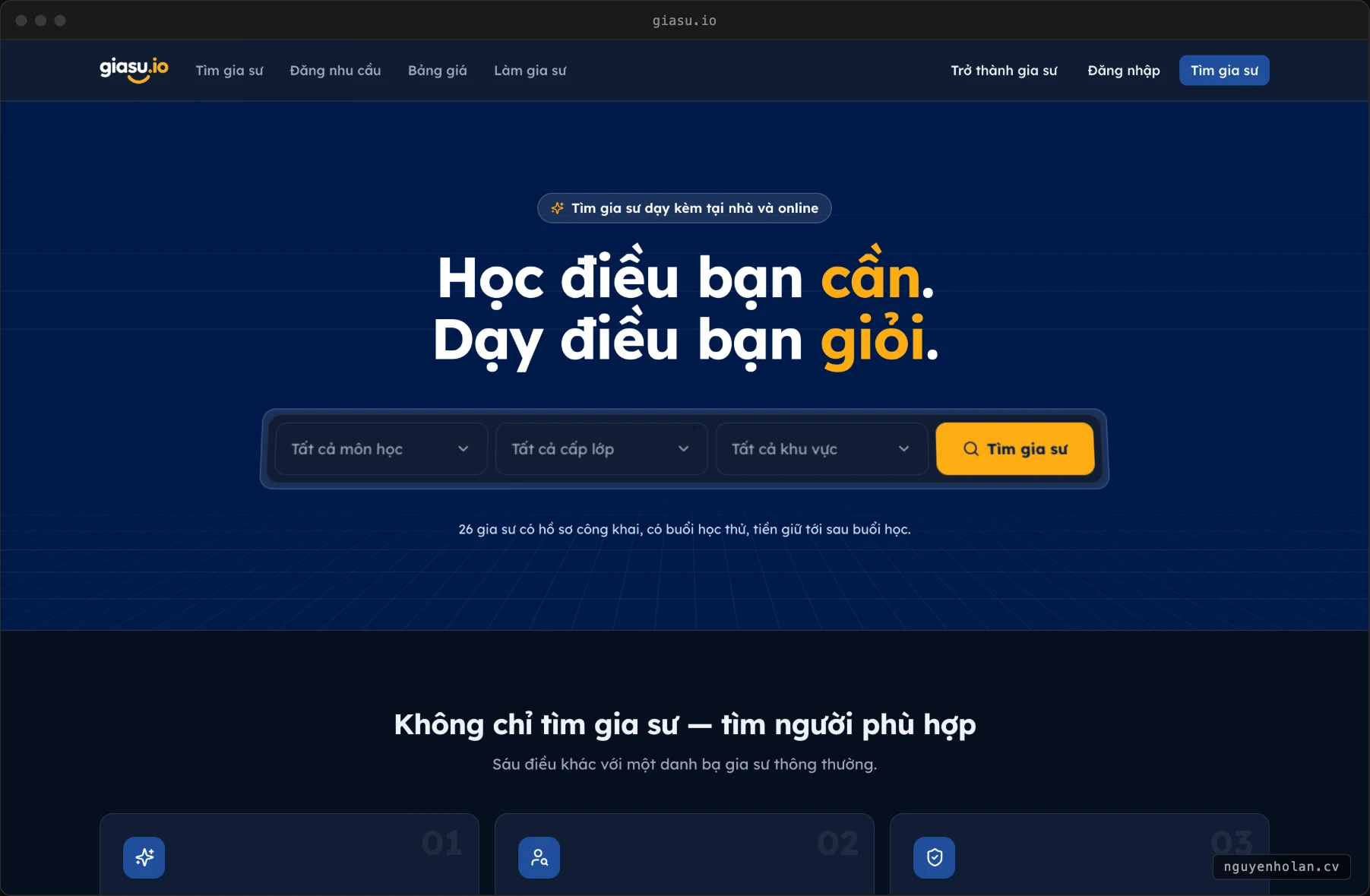
Features
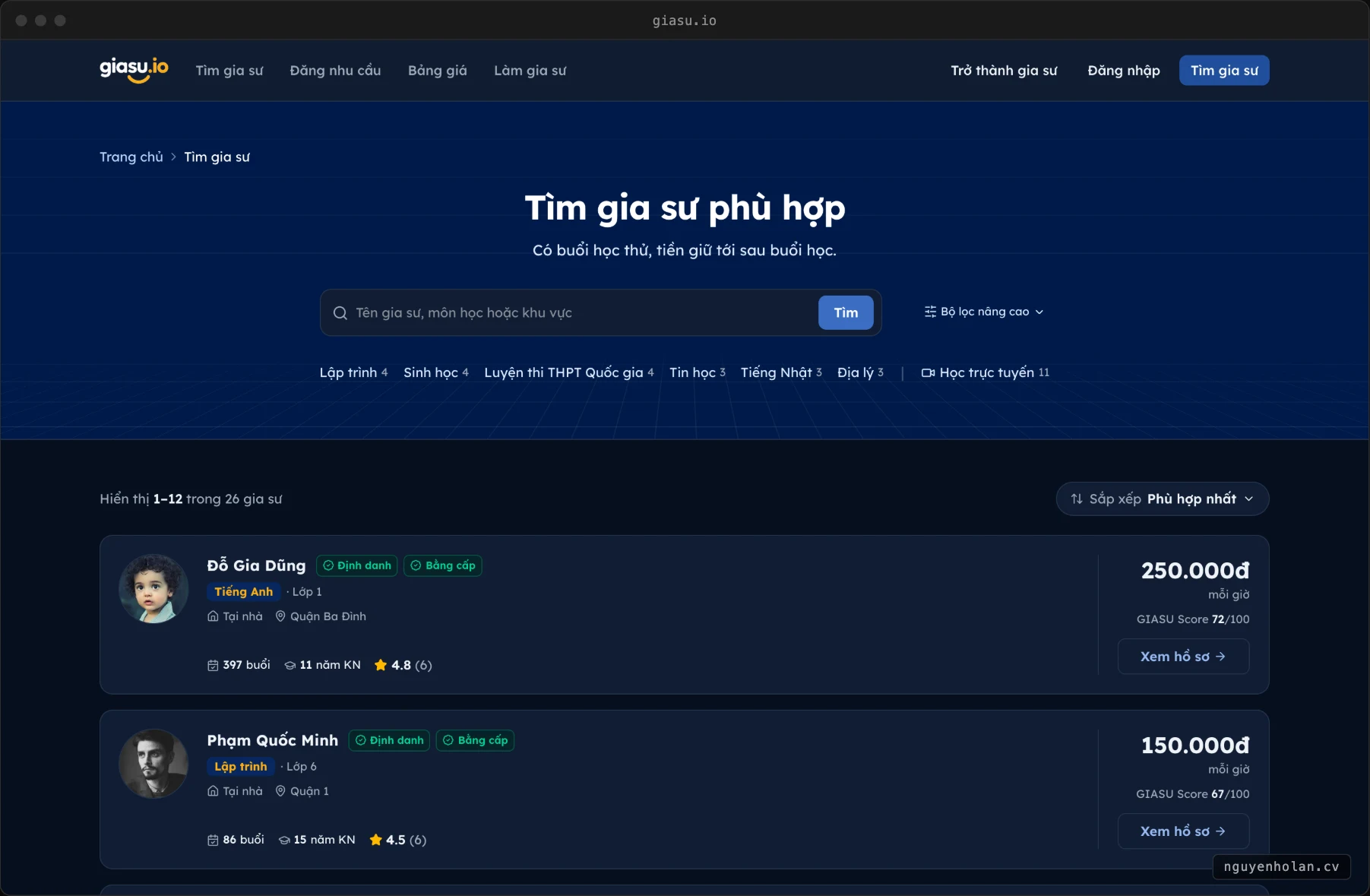
Search and trial
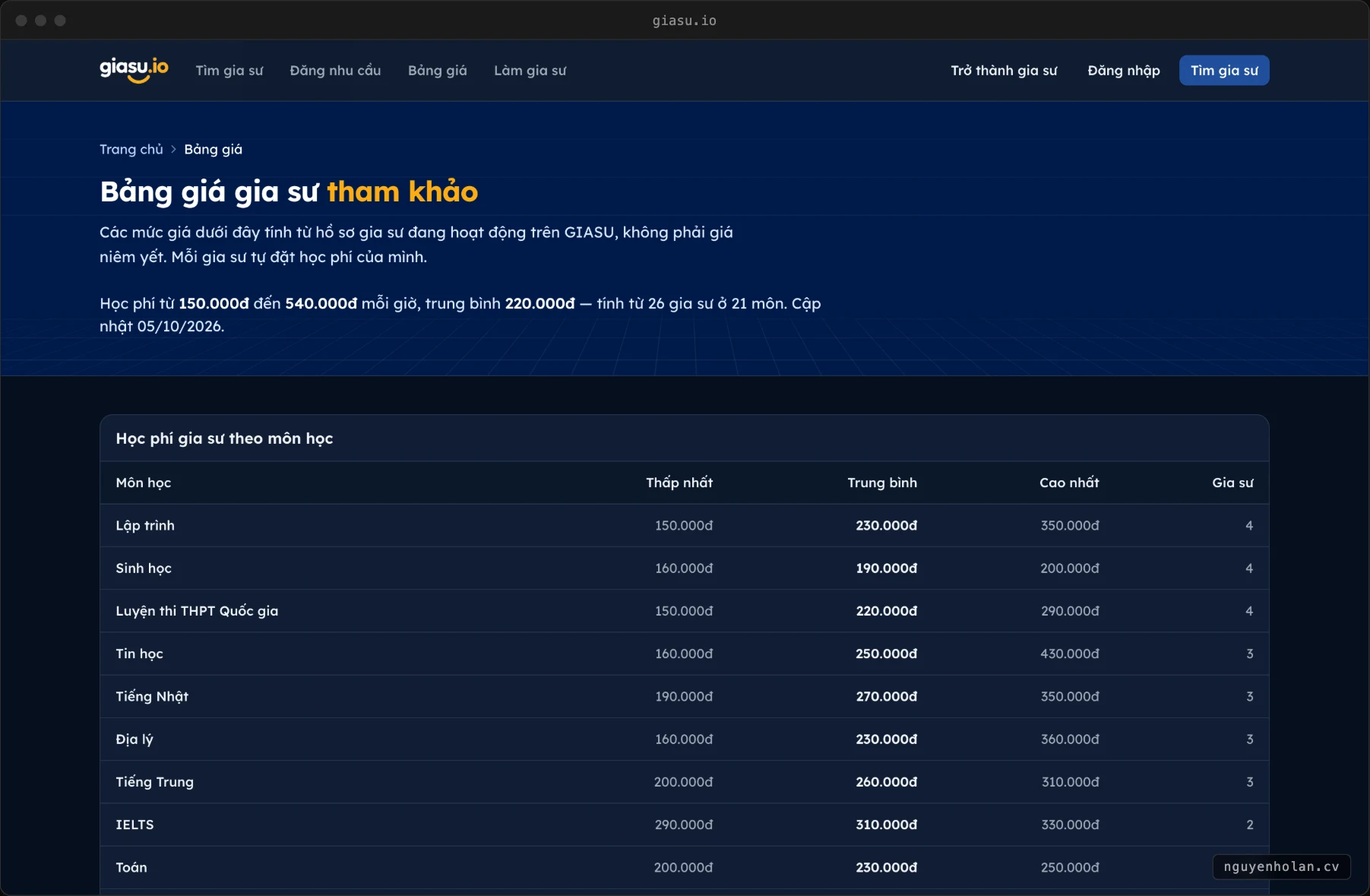
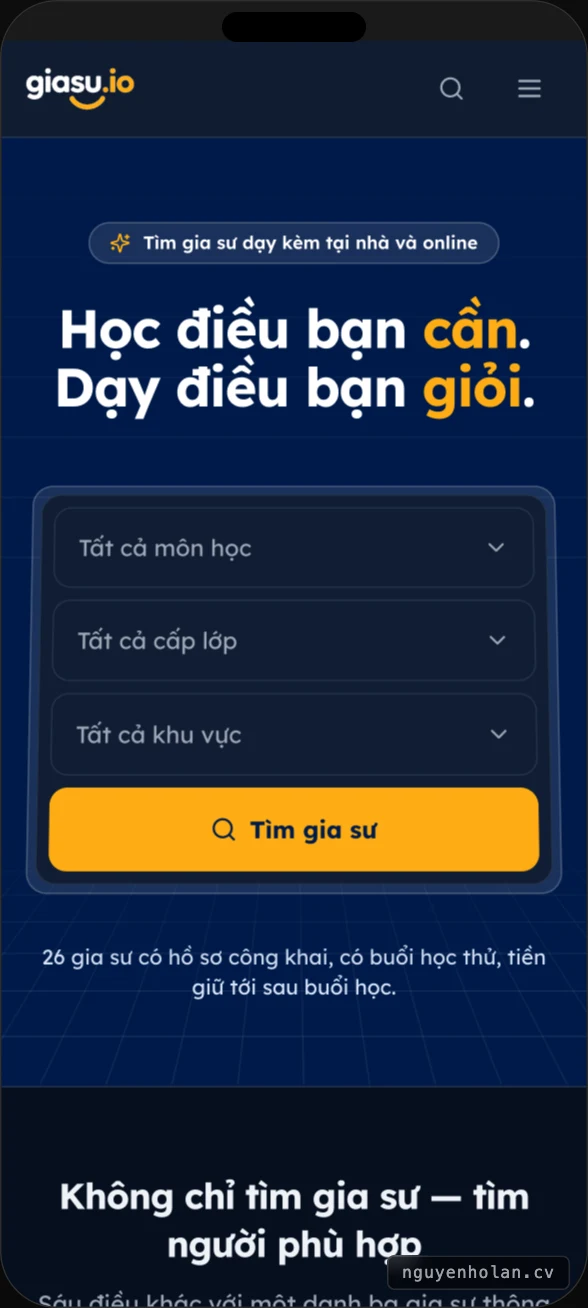
Filter by subject, grade, area and in-person or online; see fees and reviews and book a trial lesson before buying a package.
GIASU Score
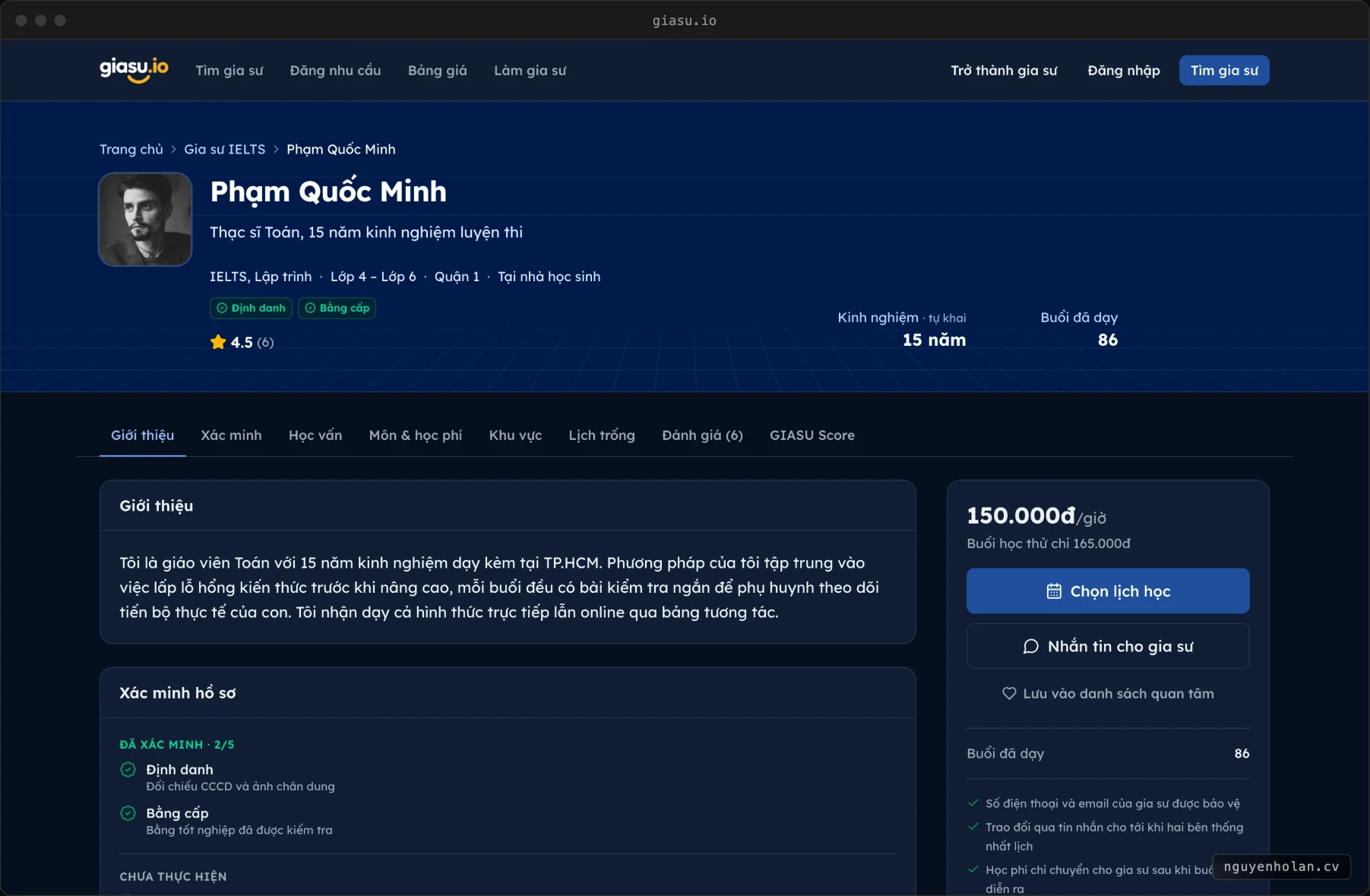
A tutor's score comes from real teaching data — lessons taught, cancellations, student progress, reviews — and tutors cannot edit it.
Learning profiles
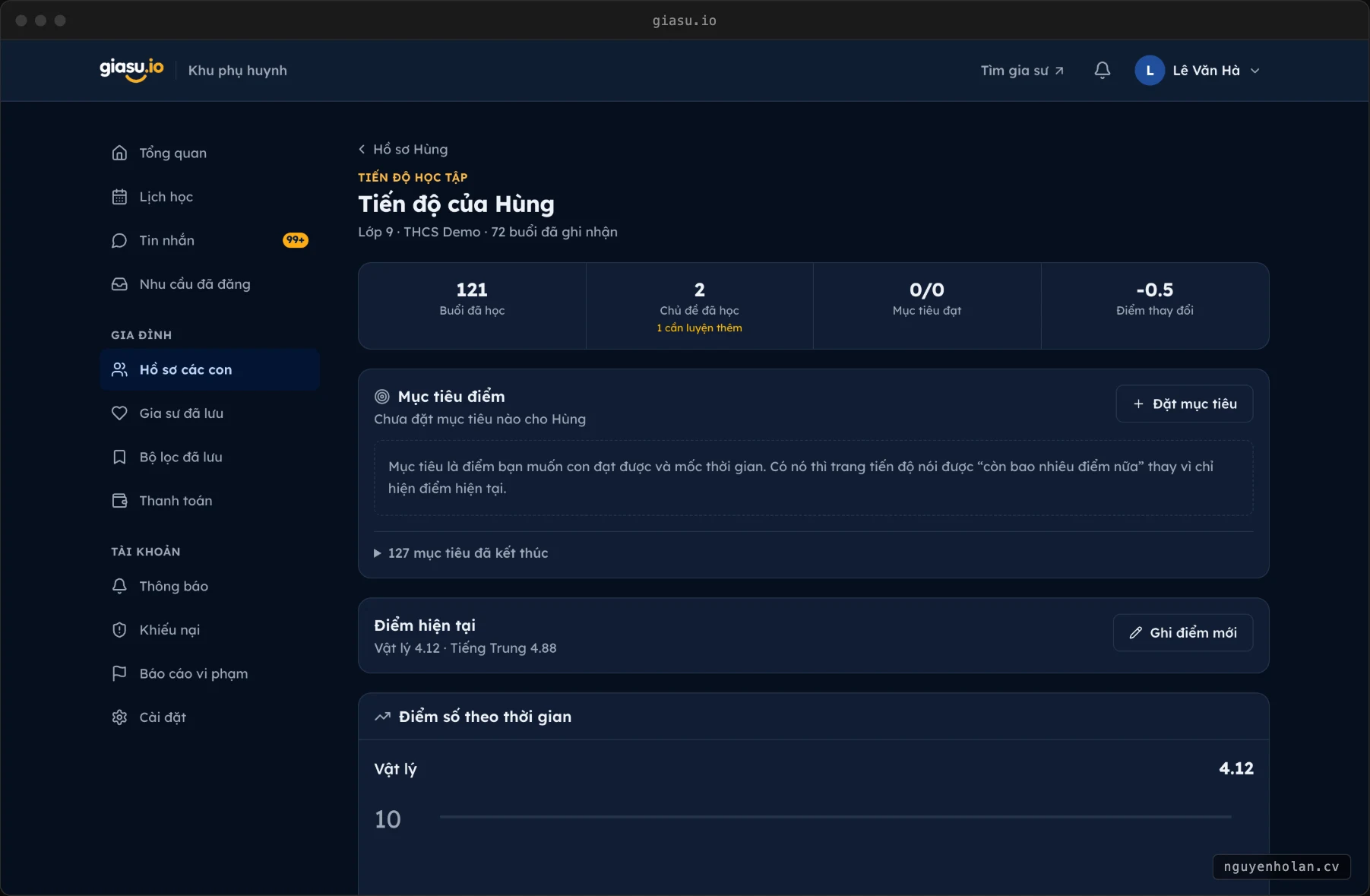
Each student has goals, current marks and a path per subject; the profile stays intact when the tutor changes.
Notes after every lesson
Tutors record understanding and next steps after each session, so parents see real progress, not just a count of lessons.
Fees held in trust
Money is held until after the lesson and a 48-hour dispute window before it reaches the tutor; cancellations, refunds and disputes each have a process.
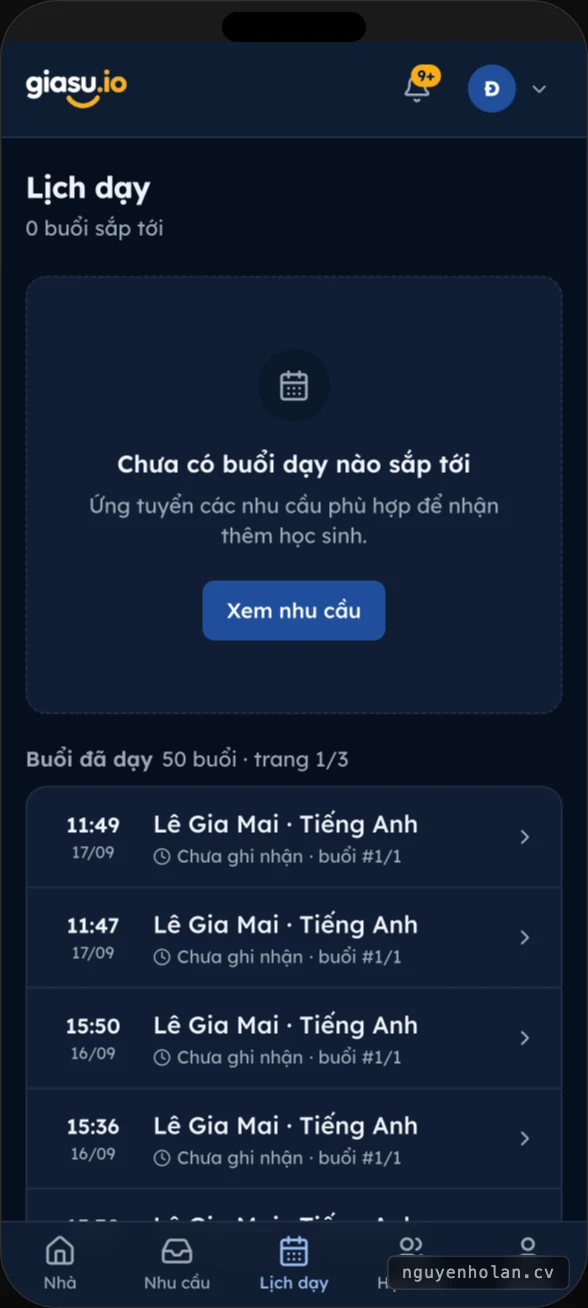
A tutor's workspace
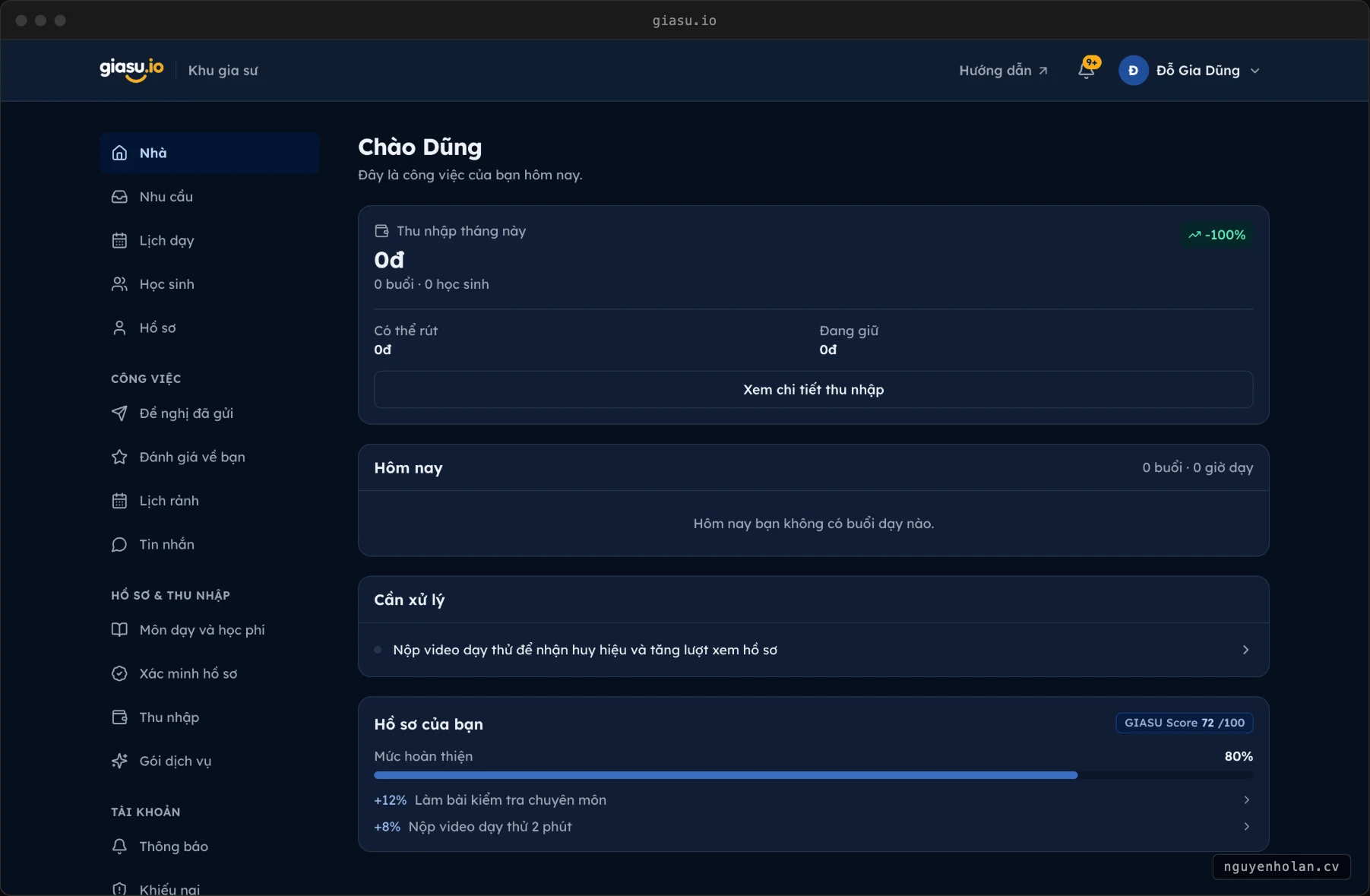
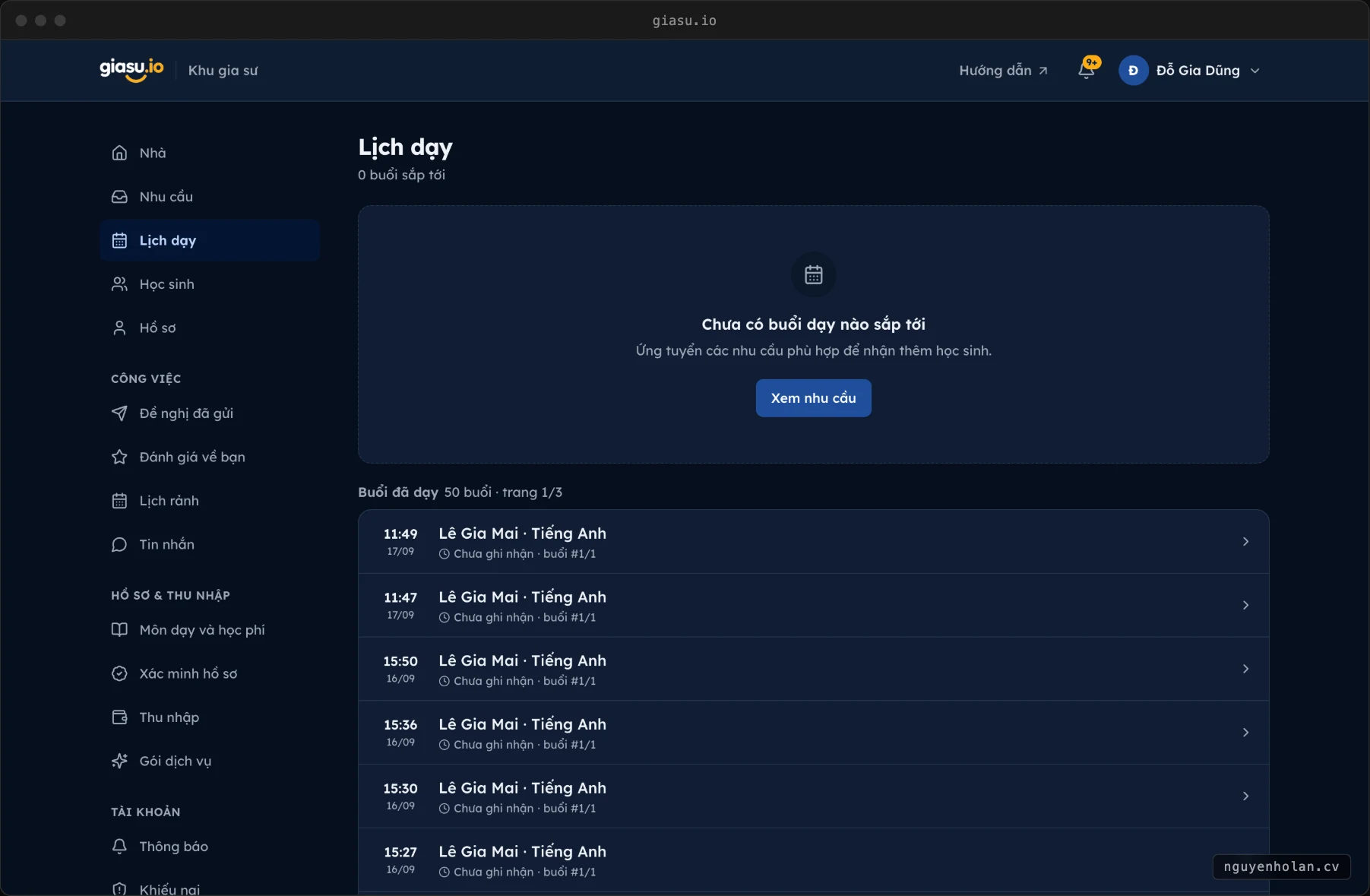
Availability, schedule, students, messages, offers, earnings and payouts in one place, on the web and in the app.
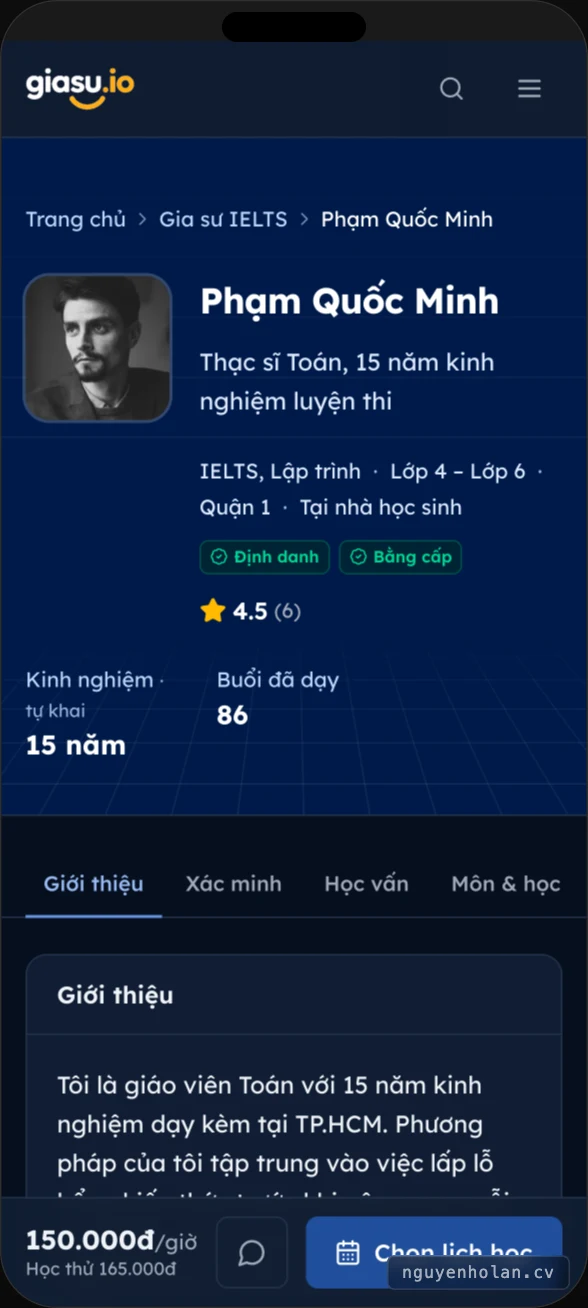
A tutor's profile
Families and tutors
On a phone
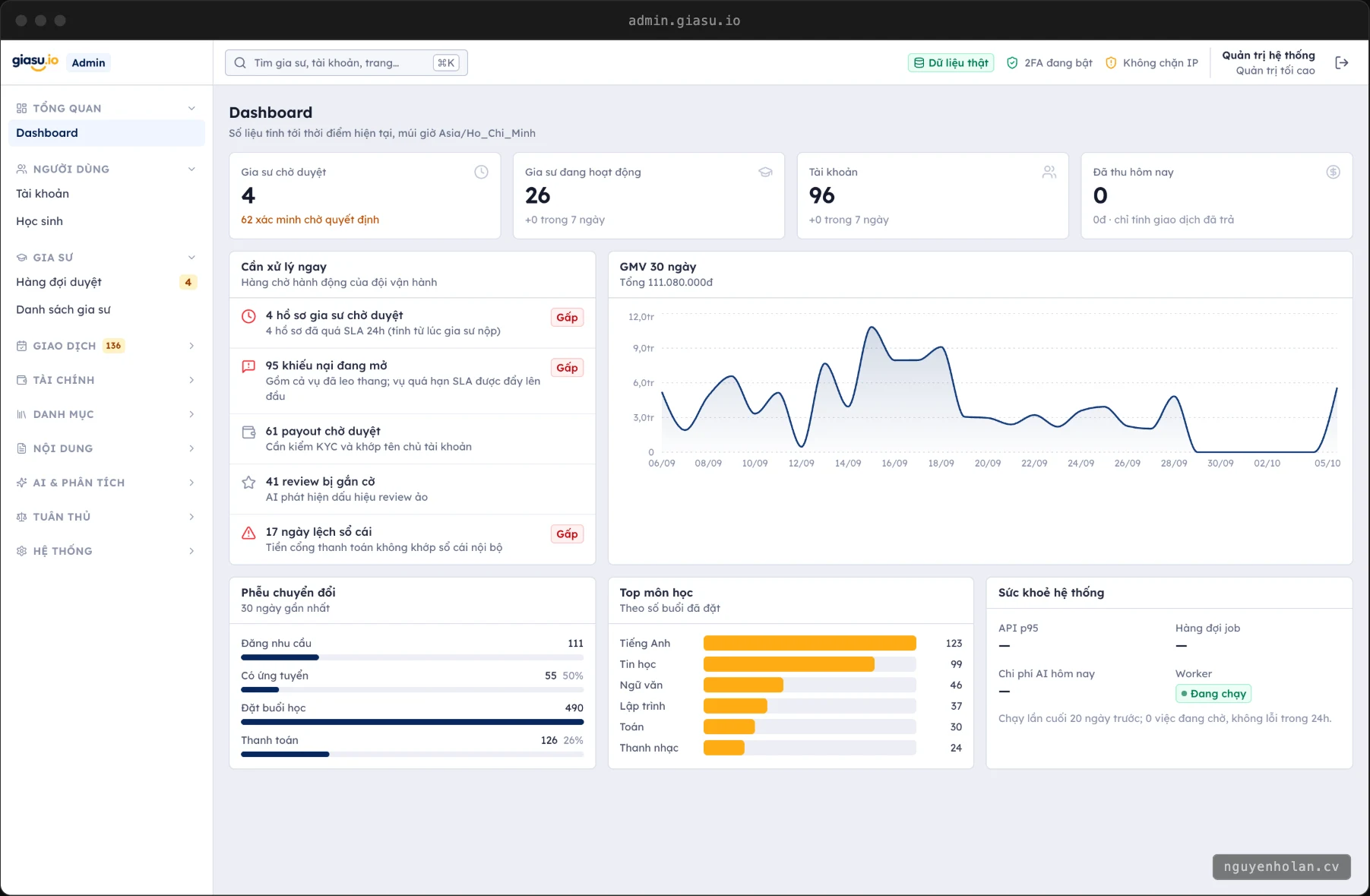
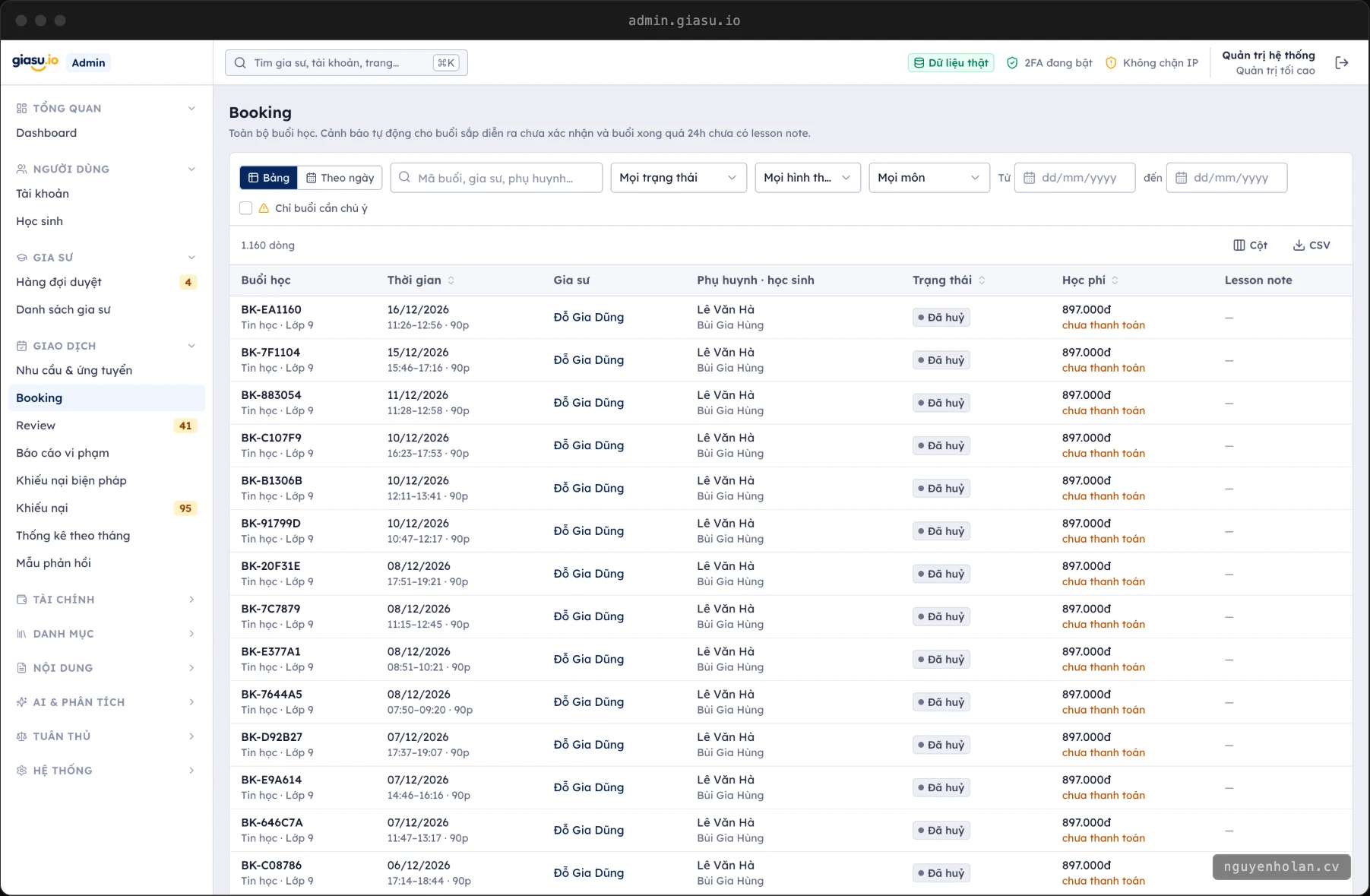
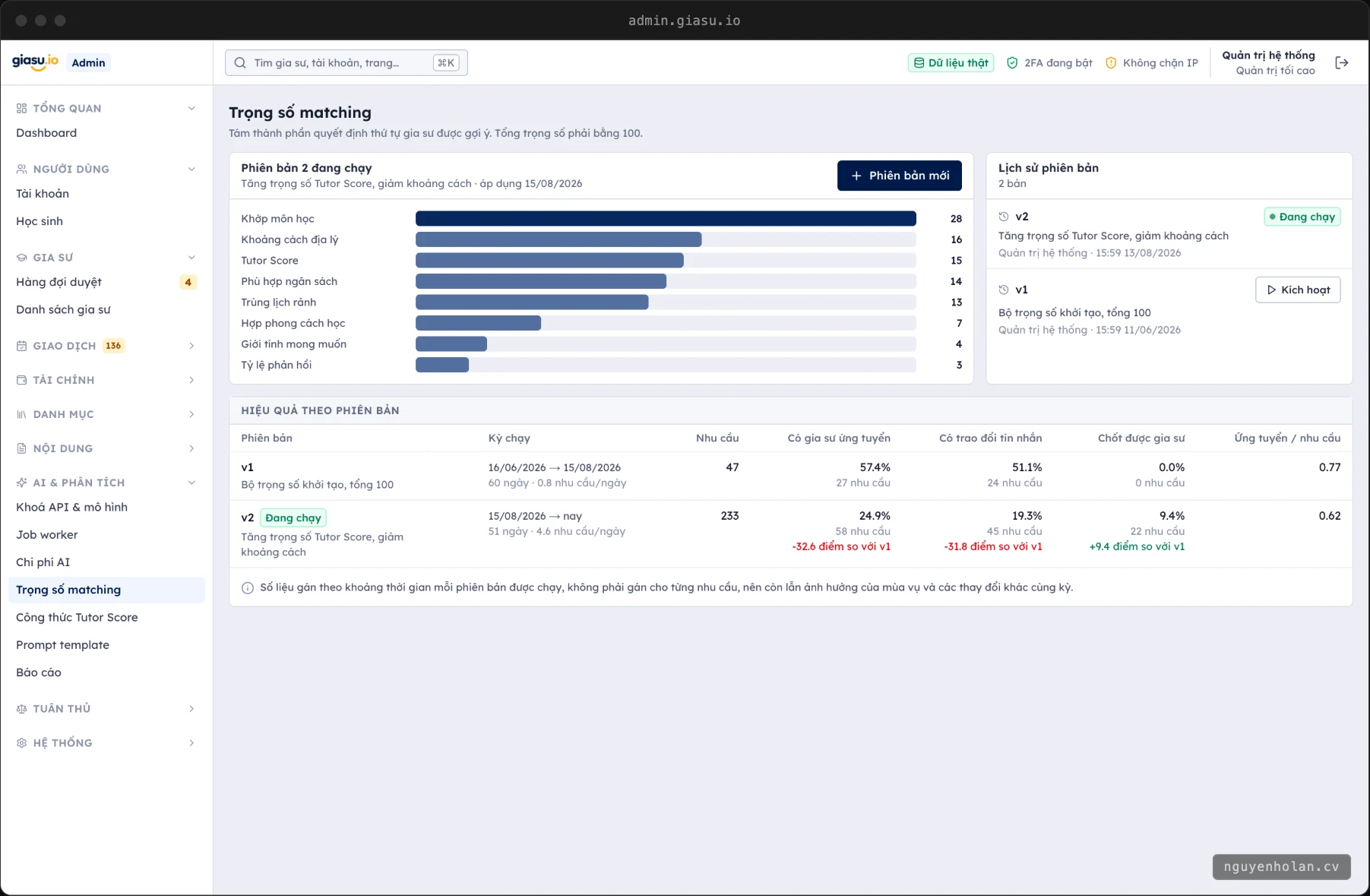
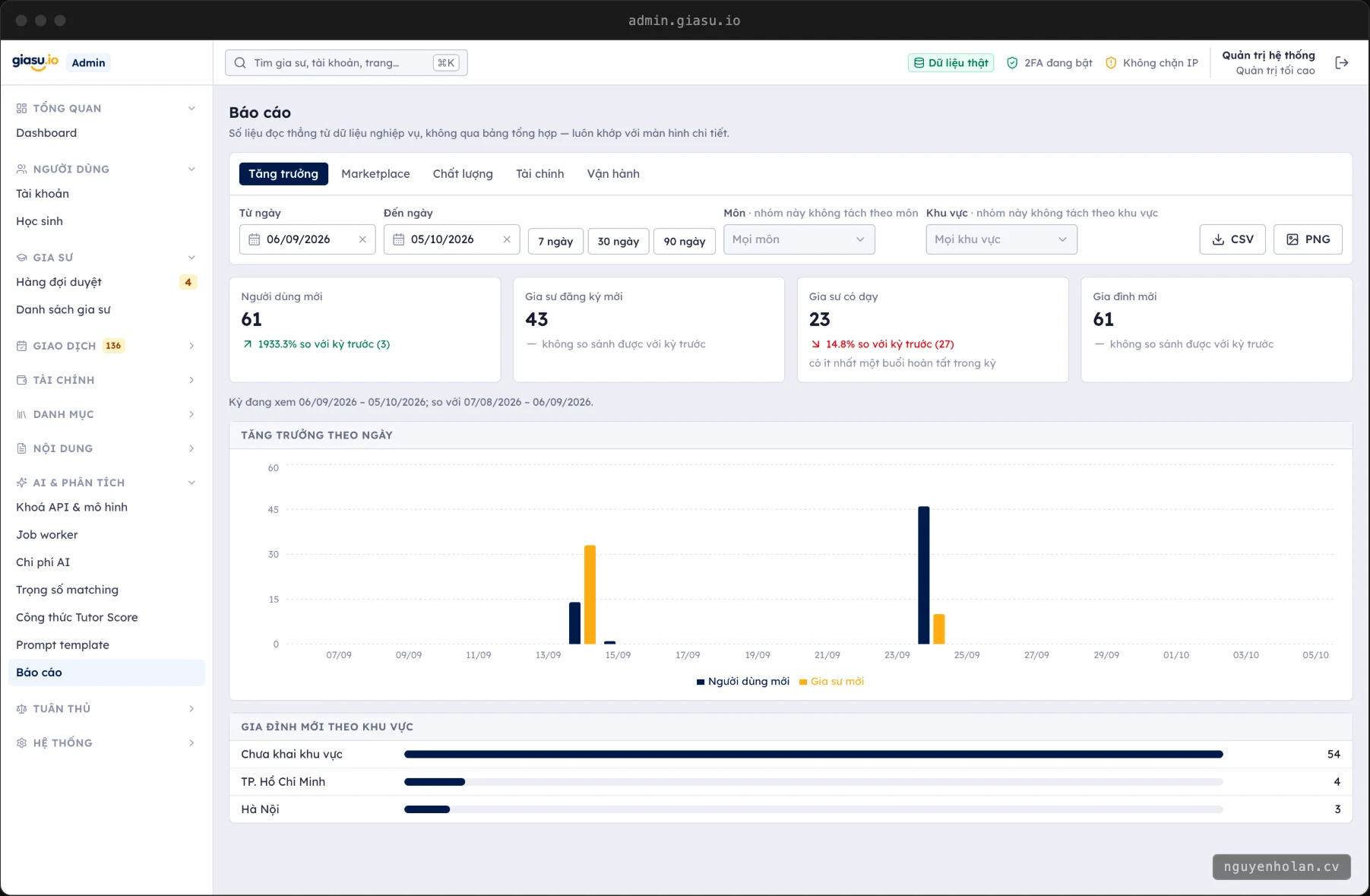
Back office
One source of truth
The web app, back office and mobile app never touch the database: everything goes through one Go API with hand-written SQL. The AI work — scoring fit, computing tutor scores, transcribing intro videos — runs in a separate Python worker fed by a queue, so the API never waits on a model. Online lessons use a dedicated WebRTC relay so the two devices connect directly.